
Originally published by Matthew Denholm and Tansy Harcourt of The Australian
26.03.2026
Australian farmers are warning the nation is racing towards catastrophe due to dwindling fertiliser supplies and no immediate federal government rescue plan, raising the prospect of multimillion-dollar crop losses and rising food prices and shortages.
As grain growers raise concerns winter crop yields are at risk and half the nation’s vegetable growers reported their fertiliser would run out within three weeks, the Albanese government has been accused of promising nothing concrete to avert a crisis, aside from a new urea plant not operational before 2027.
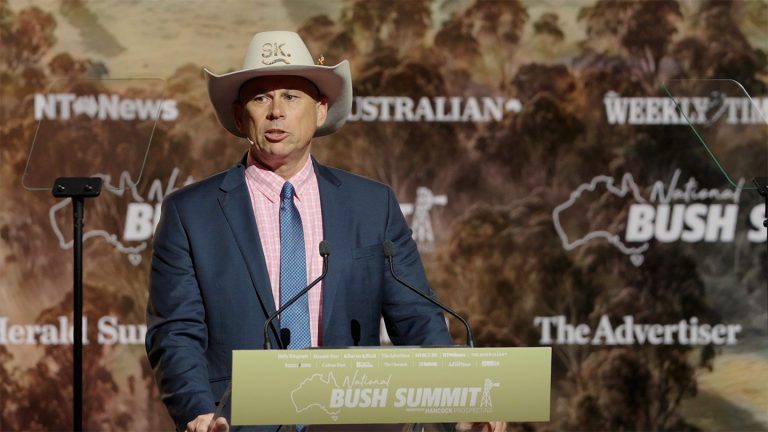
National Farmers Federation president Hamish McIntyre on Thursday told The Australian the emerging fertiliser crisis was “extremely worrying” and new supplies must be found urgently.
“If farmers cannot access reliable and affordable inputs they will scale back plantings,” Mr McIntyre said. “This will impact their business, Australia’s agricultural production and, ultimately, food availability. We’re in a situation now that we need fertiliser – no matter how it gets here or where it’s from. We encourage the federal government to explore fuel and fertiliser markets in North and South America. We need the government to think laterally about all options available.”
The Middle East conflict continues to ripple through domestic fuel supplies, with Energy Minister Chris Bowen on Thursday announcing more than 600 service stations had been affected by the global crisis.
Anthony Albanese insisted the nation’s fuel supplies were secure and detailed measures taken by the government to shield consumers from the global oil crunch.
“Whether it is state and territory governments, whether it is with international partners or with industry, a calm, steady, fact-based approach is what we are focused on, because we want Australia to be overprepared,“ he told question time. “I want us to have the strongest plan so we are ready for what may come.”
But fertiliser shortages – and prices doubling for what little supply can be secured – are delivering a second blow to farmers already struggling to source the diesel needed to keep their machinery running. Australia relies almost entirely on imports of popular fertilisers, and 60 per cent of its urea imports travel through the Strait of Hormuz, severely disrupted by the Iran war.
Fertiliser Australia said with shipments stranded in the strait and future shipments cancelled, it could not guarantee supply would “fully meet the needs of farmers in the medium term”.
NSW mixed cropping farmer Charlie Blomfield is waiting for the arrival of a fertiliser delivery ordered just before the US and Israel attacked Iran. He’s been told it is “at the terminal,” but has been unable to find out when it might arrive at his Canowindra farm.
“I think that when people consider the supply chain, they don’t look at the core inputs … and what it actually takes to grow our food,” Mr Blomfield said. “It’s a matter of logistics, and either having capacity to produce or stockpile. Instead, we have nothing.”
Mr Blomfield believed some farmers might not be able to plant crops. “There will be cases of people doing that, whether it’s the reality of not getting the fertiliser or the fear of participating in this current market, because it’s a pretty daunting task to be planting crops when your input prices are twice what they normally are,” he said.
About 50 per cent of vegetable growers are already reporting looming fertiliser shortages – a factor in 27 per cent of them cutting production – and are calling for national efforts to source and stockpile supplies and to prepare for potential rationing.
GrainGrowers on Thursday warned of “serious ramifications” for Australia’s grain harvests. “Limited or cost prohibitive access to fertiliser and fuel could mean that some growers will not be planting a crop in 2026, taking the significant financial hit that comes with that decision,” chief executive Shona Gawel said.
“In parts of Australia, this is compounded by the fact growers have faced years of drought and were banking on the recent rains as a turning point for their operations. With some 24,000 grain farm businesses contributing $23bn to Australia’s gross value of production, the flow-on impact on farms, regional communities and the national economy should not be understated.”
An AUSVEG survey of more than 180 growers shows 51 per cent have only three weeks or less of fertiliser supply – with 5 per cent having a week or less worth, 20 per cent having two weeks’ worth and 26 per cent having three weeks’ worth.
GrainGrowers and AUSVEG are urging the federal government to urgently set up a fertiliser supply taskforce to co-ordinate supply, expand and diversify trading partner and to establish reserves. “As planting rapidly approaches, growers face tough decisions with availability of fuel and fertiliser uncertain and costs accelerating rapidly,” Ms Gawel said. “Australia currently has around six weeks of fertiliser supply on hand, which provides some immediate coverage for winter sowing, but the long-term outlook is deeply concerning and now is the time to act.”
GrainGrowers chair Rhys Turton said most growers had been able to source 70 per cent or more of their planting fertilisers, but supplies of vital post-planting nitrogen inputs – urea and urea ammonium nitrate – were “desperately short”. Inability to apply post-planting nitrogen would have a major limiting impact on crop yields, he warned.
AUSVEG chief executive Michael Coote said while some growers were still using existing fertiliser stocks “others are indicating severe shortages”.
“These will widen and worsen unless growers are prioritised by the government for access to fertiliser and other key farming inputs,” Mr Coote said.
“Access to reliable fertiliser supply is crucial to ensuring Australian vegetable growers can continue supplying Australian families with food. As the combined price surges of critical farm inputs like fertiliser, fuel, power, freight and packaging continue to bite, some growers are already reducing planting schedules, and more will do so the longer the longer uncertainty persists.”
The Albanese government said it was “working day and night with our farmers and producers to help manage the impacts of the conflict in the Middle East”, including fertiliser supply.
“We know this is causing challenges for our farmers and producers,” a spokesman said. “That’s why we have established a cross-agency working group to monitor the supply of critical inputs, including fertiliser, and we are working with industry to help farmers and producers get the fertiliser they need.
“Government and industry have been working together with the ACCC to monitor and co-ordinate fertiliser supply and are also jointly engaging with alternative suppliers of fertiliser.”
The government also trumpeted its support for the $6.5bn Perdaman Urea Project in Western Australia, but farmers said this would not be up and running until 2027 at the earliest – too late to assist with the current crisis.
Australia has some of the most ancient and nutrient-deficient soils on earth. Without the application of phosphate-related “starter” fertilisers like mono-ammonium phosphate, which Mr Blomfield and other farmers are waiting for, and subsequent “top-dressing” with urea, its estimated Australian yields could collapse by 40 per cent.
Mr Blomfield said it had previously taken about 1.8 to two tonnes of wheat to pay for the purchase of one tonne of urea, But in the current market, that ratio had doubled to four. This meant that even if a farmer could physically obtain the fertiliser, the margin for profit had been entirely consumed by input costs before the seed hit the ground.
WAFarmers reports urea prices have more than doubled from about $US350 per tonne in December 2025 to about $US750 – or about $1400 per tonne “on farm”.
“Not that you are likely to get it – there is effectively no new stock available for April seeding,” WAFarmers chief executive Trevor Whittington said on social media.
TasFarmers said Tasmania had received its “last foreseeable delivery” of urea and that it had written to the Australian Competition & Consumer Commission raising concerns about potential price gouging.